Cruise Medicine Kit Checklist for Families
Disclosure: This post contains affiliate links. If you purchase through my links I may earn a small commission at no extra cost to you.
You pack sunscreen. You pack lanyards. You pack three different pirate accessories because Pirate Night is a whole thing.
And then somewhere between the excitement and the chaos, medicine falls to the bottom of the list.
Here’s the thing though. A cruise ship is not a CVS. Yes, Disney ships have a medical center on board. But if your kid wakes up at 2am with a fever or your stomach decides it does not like the open ocean, you really do not want to be figuring that out in the middle of the night without the supplies you need.
We learned this firsthand on our Thanksgiving 2025 Disney Fantasy Merrytime Cruise. With two kids and a son with some significant medical needs, I put a lot of thought into our cruise medicine kit before we ever left the house. It was one of the best things I did for my peace of mind the whole trip.
Save this before you start packing.
Quick Cruise Medicine Checklist
Short on time? Here’s the fast version. (Keep reading for the full breakdown, including the one seasickness mistake most families make before they even board.)
For kids:
- Children’s Tylenol and Children’s Ibuprofen
- Children’s Benadryl or cetirizine for allergies
- Motion sickness bands and/or Dramamine for Kids
- Prescription medications and epi-pens if needed (more below)
For adults:
- Ibuprofen, Pepto-Bismol tablets
- Meclizine (Bonine) for daytime motion sickness, Dramamine for nighttime
- Motion sickness bands
First aid:
- Mini first aid kit with bandages, Neosporin spray, and alcohol wipes
- Blister bandages (port days will earn these)
- Forehead thermometer
- Tweezers
That covers the basics. But there’s more to it once you factor in kids, prescription meds, and the specific things that go wrong on a cruise that most packing lists never mention. Keep reading.
Medications for Kids
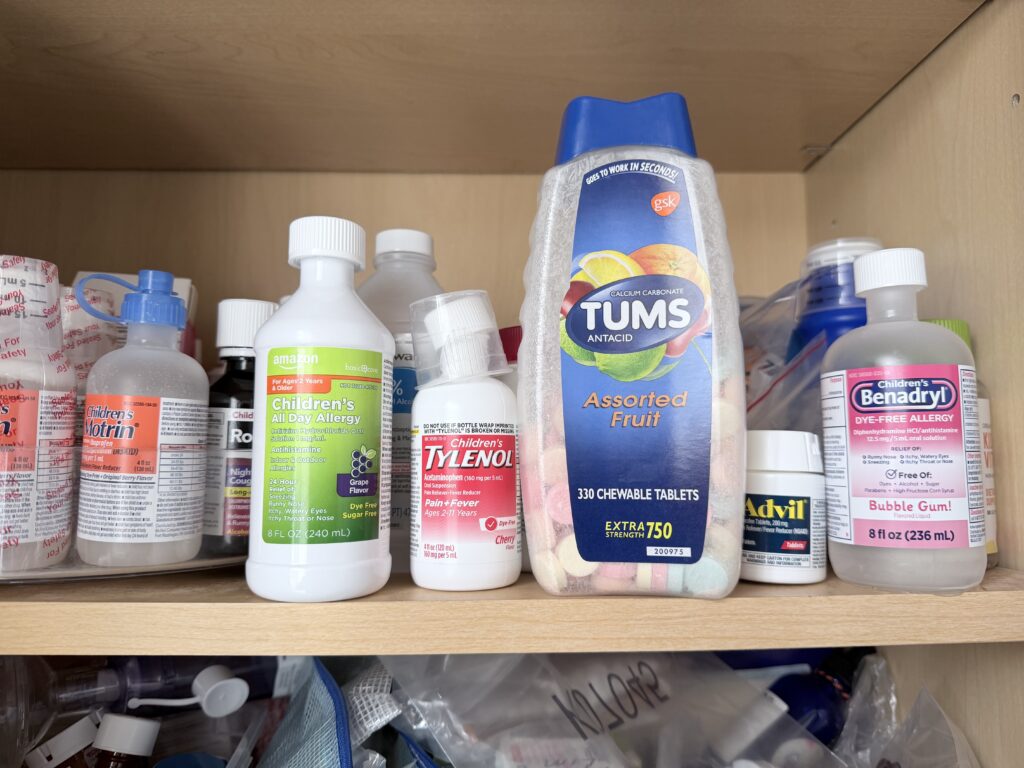
Kids get fevers at the worst possible times. They touch every surface on the ship. They wear themselves out at the pool and crash hard. Having the right meds in your bag means you’re handling it calmly instead of panicking at the guest services desk at midnight.
Fever reducers:
Pack both Children’s Tylenol and Children’s Ibuprofen. You can alternate them when a fever is stubborn, which gives you more flexibility than one alone. Liquid versions for young kids, chewables or tablets for older ones.
Allergy meds:
Even if your kids don’t have seasonal allergies at home, a new environment and lots of outdoor time can bring out reactions. Cetirizine (Children’s Zyrtec) is non-drowsy and works well day-to-day. Keep Children’s Benadryl on hand for more acute reactions.
Motion sickness:
Here is the mistake a lot of families make: they wait until someone feels sick to start thinking about prevention. By then it’s already harder to manage.
We had never been on a cruise before our Disney Fantasy trip and I had no idea how the kids would handle the movement. I remembered getting seasick as a kid, so I packed all of it. Silicone motion sickness bands over fabric ones because the kids were in and out of the pool all day. Put them on before you board, not after you feel queasy. They work as prevention, not a cure.
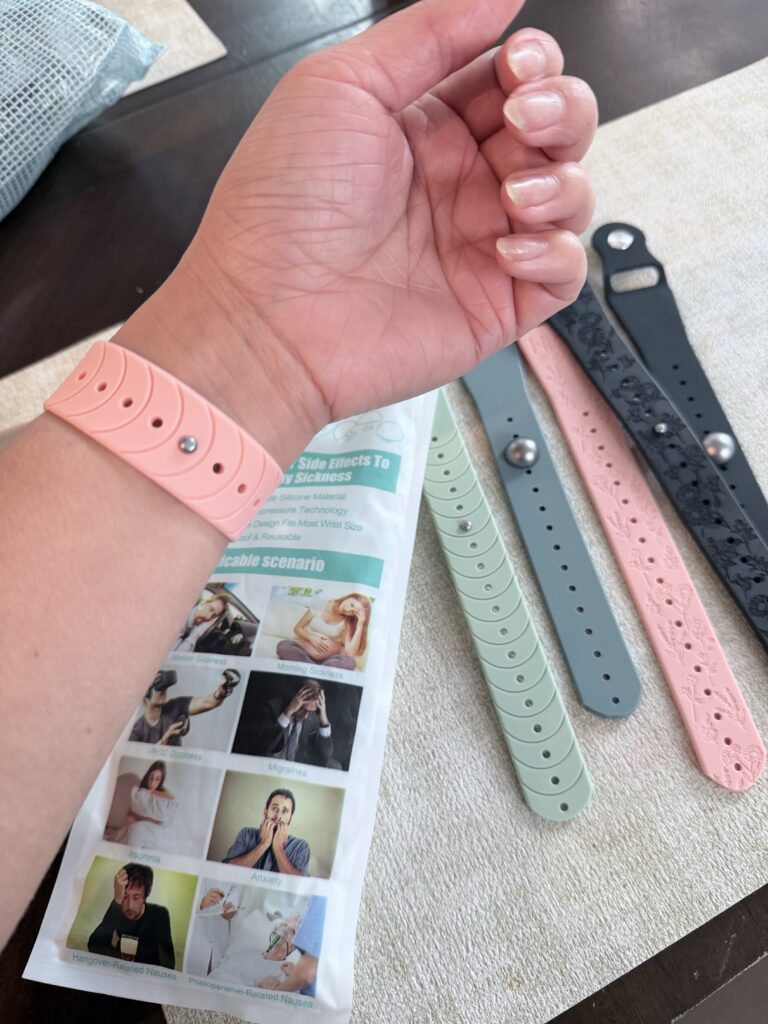
Mom tip: The first couple nights on the ship you can really feel the movement. That’s normal. Bands on before boarding made a real difference for us.
Prescription meds:
This is where most cruise packing guides completely fall short.
My son Kylo is a liver transplant recipient and cancer survivor. He takes daily medications, one of which requires refrigeration. Here’s what actually helped us:
- Did a 90-day fill before the trip and brought half with us in case anything was lost
- The Disney Fantasy cabin fridge was more than enough for his meds
- Packed an insulated medicine travel pouch with a cooling pack for port days off the ship
- Had his doctors write a paper prescription for emergencies
- Kept all medical records printed and saved digitally in our Notion planner
He also has mild asthma and food allergies, so we packed his inhaler and two sets of epi-pens. We had travel insurance too, which gave me a lot of peace of mind once we were at sea.
I’ll do a deeper post on traveling with a medically complex kid, including how Disney accommodated his food allergies at every single meal. The short version: call Disney ahead of time. They are incredibly accommodating.
First Aid Essentials
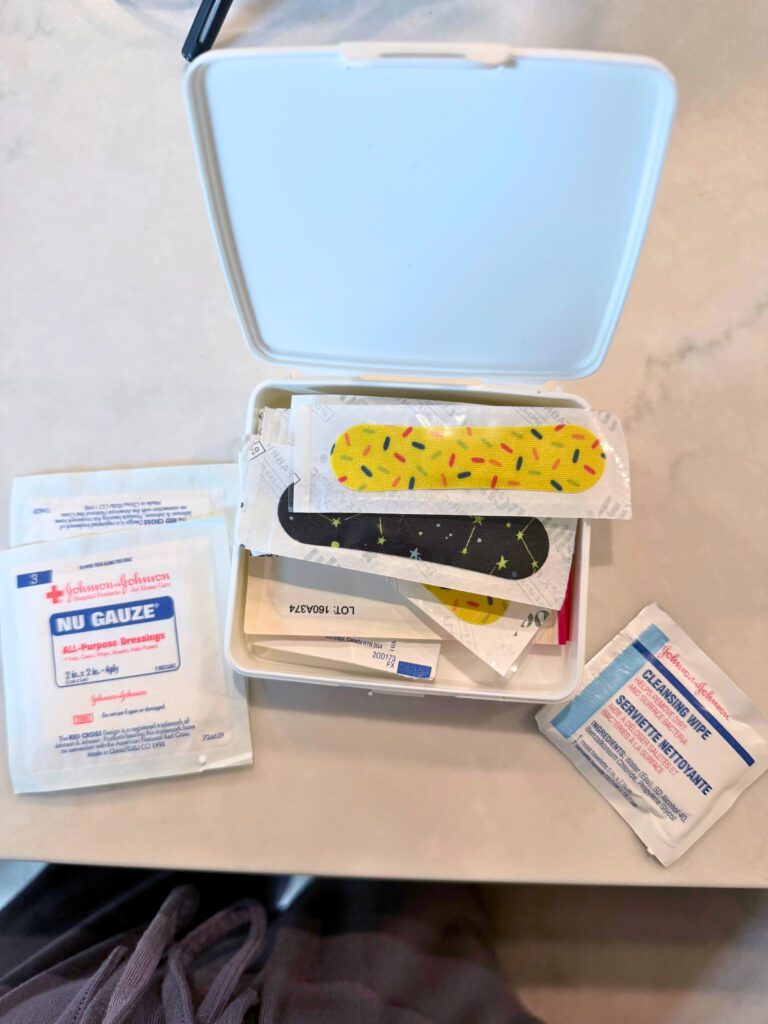
A compact first aid kit covers 95% of what actually comes up on a family cruise. You do not need a giant case of everything. Here’s what matters:
- Bandages (more than you think, kids burn through them)
- Neosporin spray over the tube version, easier on a squirmy kid
- Alcohol wipes for cleaning scrapes
- Blister bandages, a few in your port day bag
- Forehead thermometer so you can tell if it’s a real fever or just an overtired kid
- Tweezers for splinters, more common on port days than you’d expect
Also worth tossing in: reef-safe sunscreen, aloe vera gel for sunburn, and a sunscreen stick for easy face application on the go.
How to Organize It So You Can Actually Find Things
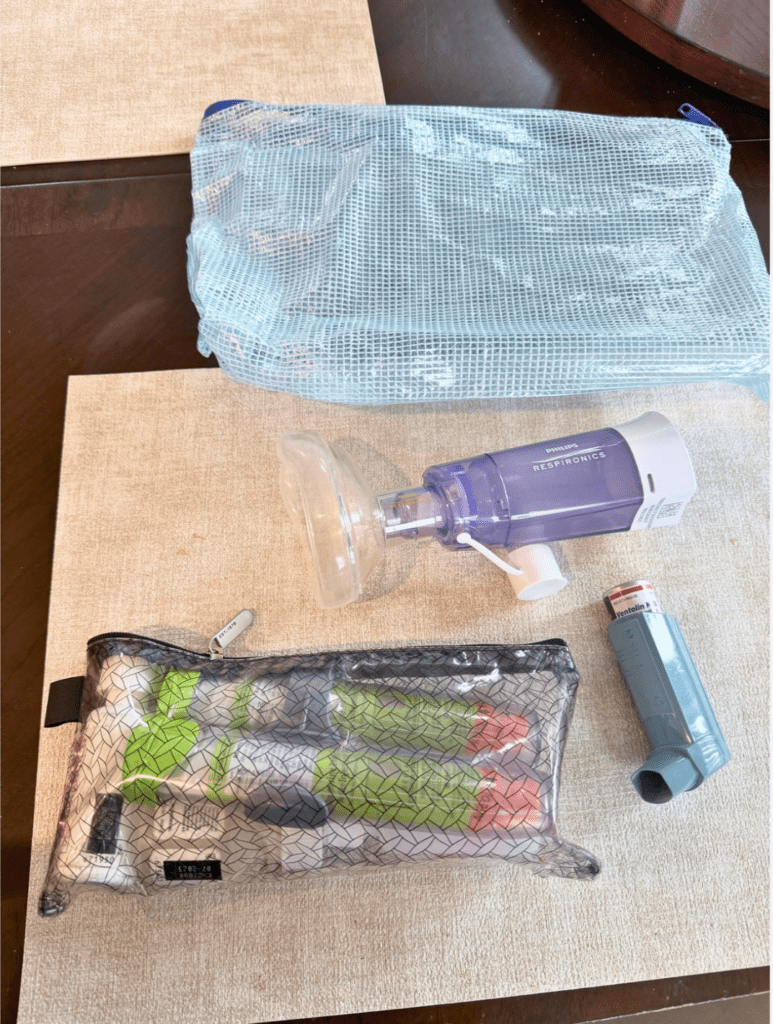
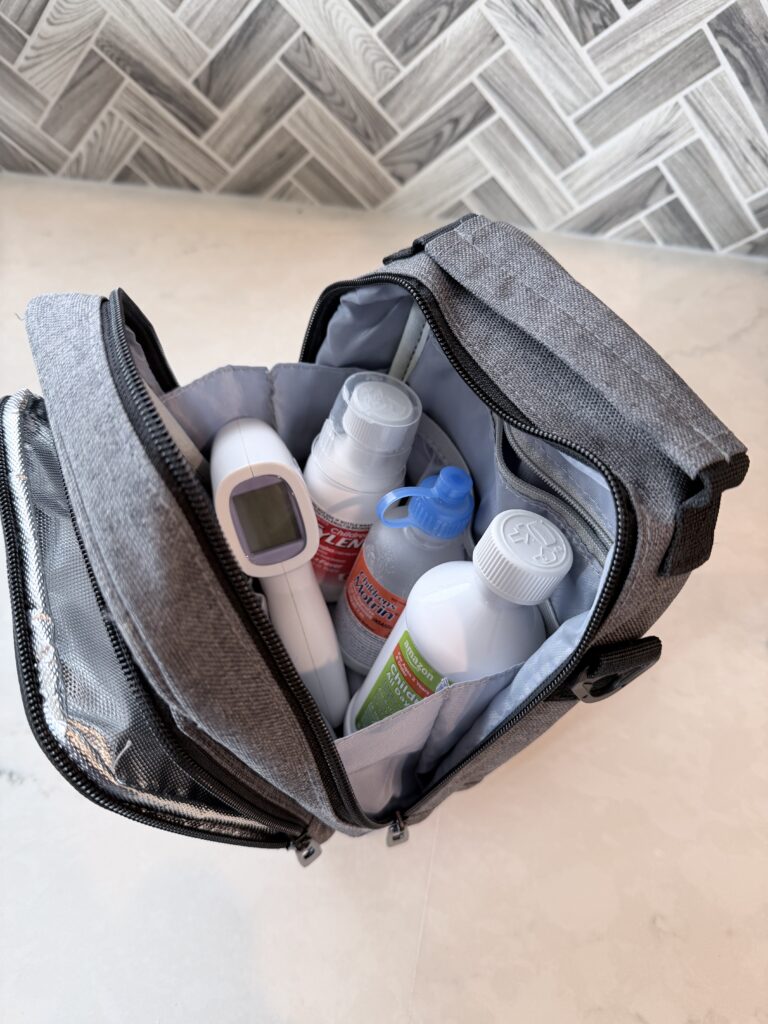
We use a medicine organizer and small zipper pouches to keep everything separated: one for kids’ meds, one for adult meds, one dedicated pouch for Kylo’s prescriptions. The mini first aid kit stays together and moves into our day bag on port days.
What goes in your carry-on: This is the part most families don’t think about until they’re at the port. On our cruise, the app said our room would be ready when we boarded. It was not. We waited in line with everything we needed, thankfully, because it was all in our carry-on.
Pack these in your carry-on without exception:
- Motion sickness bands (put them on before you board)
- Any prescription meds that can’t be missed
- Kids’ fever reducers and thermometer
- Your mini first aid kit
Everything else can go in checked luggage.
One more thing on liquids and TSA: Liquid medications are exempt from the 3-1-1 rule. You can bring full-size liquid medicine in your carry-on, you just need to declare it at security. Keep it accessible so you’re not digging for it in the security line.
Mom tip: Photograph every prescription label and save it to your phone before you leave home. If anything gets lost or a pharmacy abroad needs information, you have it right there.
FAQs
Yes, there’s a medical center and a small shop with some OTC items. But the selection is limited, hours aren’t always convenient, and prices are higher than at home. Think of it as a backup, not your plan A.
Start with silicone motion sickness bands before boarding. They’re gentle, medication-free, and work as prevention. If you want a backup, Dramamine for Kids is widely used, but check the age guidelines and talk to your pediatrician first.
Keep them in original labeled bottles. Bring more than you think you need. Have a copy of each prescription on your phone. Call the cruise line ahead of time if anything needs refrigeration. For international ports, ask your doctor to write a paper prescription just in case.
Yes, staffed by medical professionals and available 24 hours for emergencies. It’s not free though, which is another reason travel insurance is worth having before you sail.
Final Thoughts
The families who have the best time on a cruise are not the ones who packed perfectly. They’re the ones who were prepared enough that small problems stayed small.
A kid with a scraped knee who gets a bandage in thirty seconds stays in a good mood. A family who puts their motion sickness bands on before the ship leaves port doesn’t spend the first night miserable. A mom who finds the Children’s Tylenol at midnight without waking everyone up feels like she has it together, even when nothing else does.
That’s really what this kit is about. Not worst-case scenarios. Just being ready for the normal stuff.
You’ve got this.
Save these too:
- Disney Cruise Packing List for Moms
- Carry-On Essentials for Disney Cruise Embarkation Day
- What Moms Forget to Pack for a Disney Cruise
Found this helpful? Pin it before you forget.